The liver is one of the most vital organs in the human body—responsible for detoxifying blood, metabolizing nutrients, storing essential vitamins, and producing proteins needed for blood clotting. To assess the health and function of the liver, doctors often order a panel of blood tests known as Liver Function Tests (LFTs).
These tests don’t just measure how well your liver is working—they also help detect inflammation, liver damage, bile duct obstruction, and even early signs of liver failure.
In this post, we’ll break down each component of the Liver Function Test, explain what it means, and what high or low values might indicate.
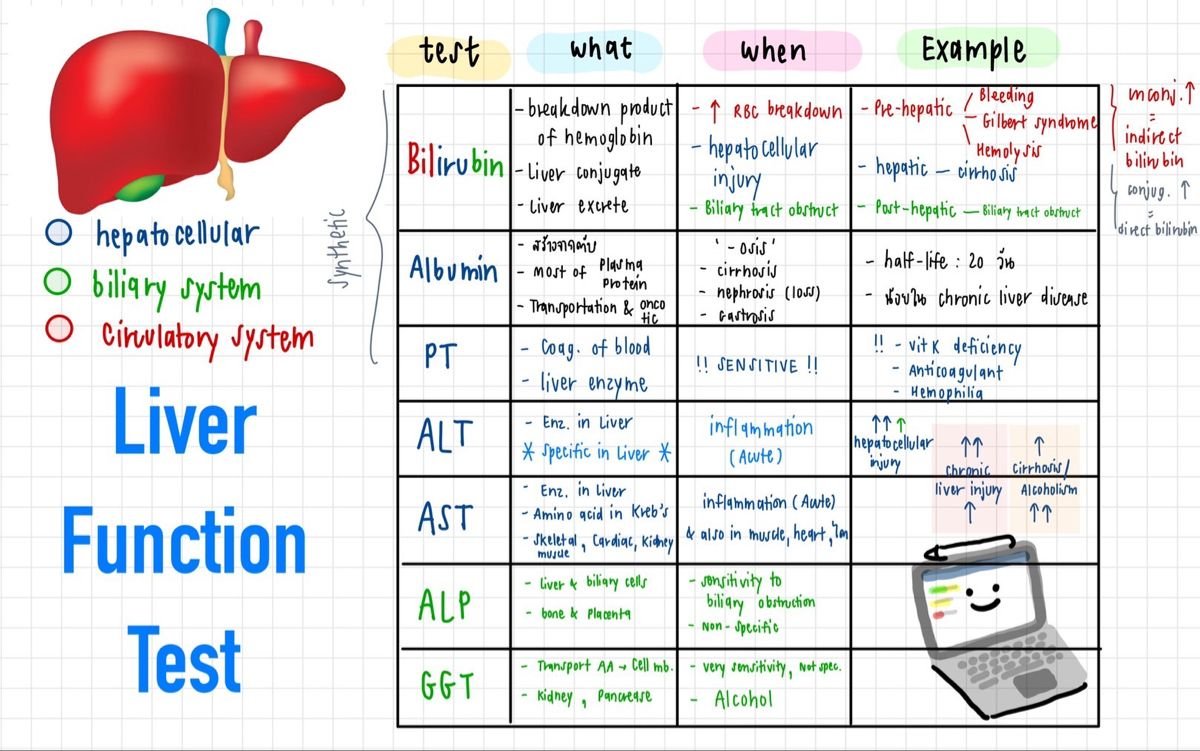
🔍 1. ALT (Alanine Aminotransferase)
- What it is: An enzyme primarily found in liver cells.
- Normal range: 10–40 IU/L
- Why it matters: ALT is specific to the liver and rises when liver cells are injured or inflamed.
🔺 High ALT:
- Hepatitis (viral, autoimmune, or drug-induced)
- Fatty liver disease
- Alcohol-related liver injury
- Use of hepatotoxic drugs (e.g., statins, acetaminophen)
🔻 Low ALT:
- Generally not clinically concerning
- May be seen in malnutrition or end-stage liver disease
🔍 2. AST (Aspartate Aminotransferase)
- What it is: An enzyme found in the liver, heart, muscles, kidneys, and brain.
- Normal range: 10–40 IU/L
- Why it matters: Less liver-specific than ALT. Used in conjunction with ALT to assess liver health.
🔺 High AST:
- Acute liver damage
- Muscle injury, heart attack
- Alcoholic liver disease (AST > ALT)
🔻 Low AST:
- Not usually of concern
📌 Tip: A high AST/ALT ratio (>2:1) often suggests alcoholic liver disease.
🔍 3. ALP (Alkaline Phosphatase)
- What it is: An enzyme found in the liver, bile ducts, bones, and placenta.
- Normal range: 40–112 U/L
- Why it matters: Often used to assess biliary obstruction or bone disorders.
🔺 High ALP:
- Bile duct blockage (gallstones, tumors)
- Primary biliary cholangitis
- Bone diseases (Paget’s, bone metastasis)
- Pregnancy (placental source)
🔻 Low ALP:
- Malnutrition
- Hypothyroidism
- Zinc or magnesium deficiency
🔍 4. GGT (Gamma-Glutamyl Transferase)
- What it is: A liver enzyme involved in bile production.
- Normal range: Varies by lab and gender
- Why it matters: Sensitive marker for alcohol use and bile duct problems.
🔺 High GGT:
- Chronic alcohol consumption
- Biliary tract disease
- Pancreatic disease
- Hepatotoxic drug use
🔻 Low GGT:
- Not clinically significant in most cases
🔍 5. Bilirubin (Total, Direct, Indirect)
- What it is: A yellow pigment formed by the breakdown of red blood cells.
- Normal ranges:
- Total Bilirubin: 0–1 mg/dL
- Direct (Conjugated): 0–0.35 mg/dL
- Indirect (Unconjugated): 0.2–0.65 mg/dL
🔺 High Bilirubin:
- Indirect ↑: Hemolysis, Gilbert’s syndrome
- Direct ↑: Hepatitis, bile duct obstruction, cirrhosis
- Can cause jaundice (yellowing of skin and eyes)
🔻 Low Bilirubin:
- Rarely significant; could be from certain antioxidant-rich diets
🔍 6. Albumin
- What it is: A protein made by the liver that helps maintain oncotic pressure and transports substances.
- Normal range: 3.5–5.5 g/dL
🔺 High Albumin:
- Dehydration
- High-protein diet
🔻 Low Albumin:
- Chronic liver disease
- Kidney disease (protein loss)
- Malnutrition or inflammation
- Cirrhosis
🔍 7. Total Protein
- What it is: Sum of albumin and globulin in the blood.
- Normal range: 6–8.5 g/dL
🔺 High Total Protein:
- Chronic infections
- Inflammatory diseases (e.g., lupus, RA)
- Multiple myeloma
🔻 Low Total Protein:
- Liver or kidney disease
- Malabsorption (e.g., celiac disease)
- Malnutrition
🔍 8. PT (Prothrombin Time)
- What it is: Time taken for blood to clot; depends on clotting factors made in the liver.
- Normal range: Around 11–13 seconds (may vary slightly)
🔺 Prolonged PT:
- Liver disease (reduced clotting factor synthesis)
- Vitamin K deficiency
- Use of anticoagulants (e.g., warfarin)
- DIC (Disseminated Intravascular Coagulation)
🧭 Why Are LFTs Ordered?
Doctors may order liver function tests when you have:
- Unexplained fatigue, jaundice, or abdominal pain
- A history of alcohol or drug use
- Symptoms of liver disease or gallbladder issues
- To monitor chronic liver conditions
- Before starting medications that affect the liver
📌 Final Thoughts
Liver Function Tests are essential tools for diagnosing liver disease early—even when no symptoms are present. They help evaluate liver inflammation, bile flow obstruction, protein synthesis, and detoxification capabilities.
If your LFT results are abnormal, your doctor may recommend further imaging or specialist consultation to determine the cause and start appropriate treatment.
🩺 Tip: Always interpret LFTs with your doctor. One abnormal value doesn’t always indicate disease—but a pattern or combination can.