- A new study reports that midlife exercise can cut women’s risk of early death in half.
- Women tend to lose muscle mass starting in midlife, which can affect health, but adequate exercise and sufficient protein intake can help preserve muscle mass.
- The World Health Organization (WHO) advises 150 minutes of moderate-intensity exercise per week.
- Experts recommend starting slow and building up to this level if you aren’t accustomed to exercise.
New research highlights the importance of staying active for women throughout middle age and beyond.
The findings, published on March 26 in PLOS Medicine, show that women who consistently followed physical activity guidelines in their 50s and 60s had a lower risk of dying prematurely.
While it’s well established that regular exercise is good for health, this study emphasizes just how important it is for women as they age.
The study examined over 11,000 Australian women born between 1946 and 1951, tracking their physical activity habits and health over 15 years.
Instead of relying on a single snapshot of activity, the researchers checked in every three years to see how participants’ exercise routines changed or stayed the same.
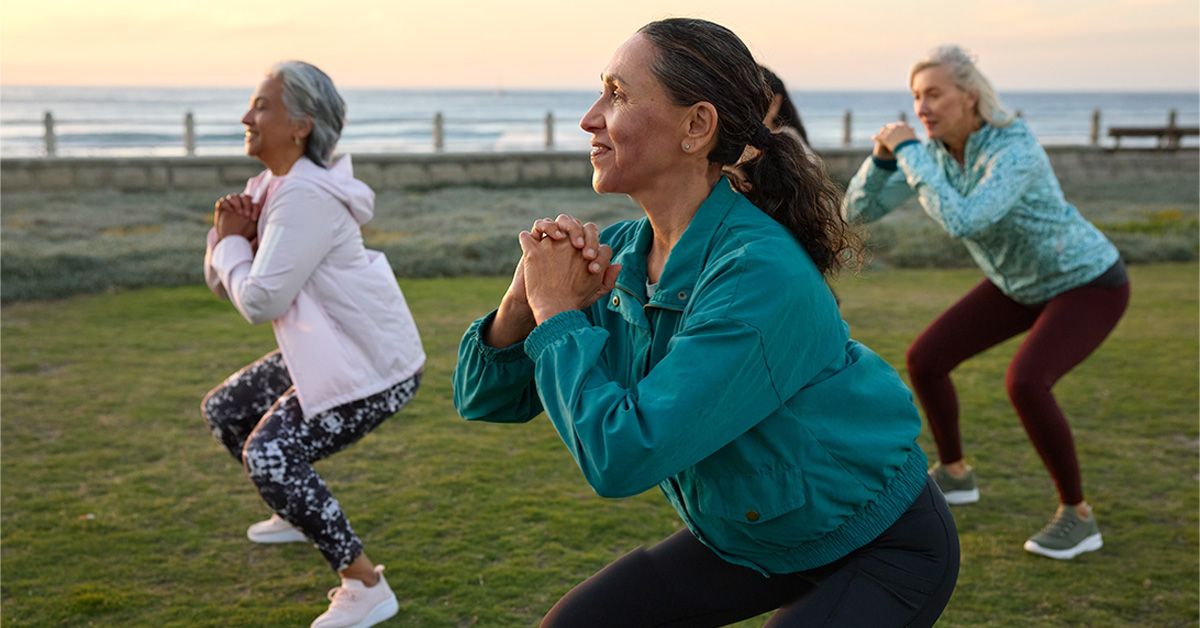
This long-term view allowed the researchers to compare those who consistently met the World Health Organization (WHO) recommendations for moderate-to-vigorous physical activity — such as brisk walking, swimming, or tennis — with those who did not regularly reach these levels.
To make the study as reliable as possible, the researchers used a special approach called “target trial emulation.” This method tries to mimic what would happen if females had been part of a controlled experiment, even though the data came from observations of their real lives.
The researchers also considered other factors that might influence health, such as age, smoking, diet, and body weight, to make sure the results focused on the impact of physical activity itself.
The physical activity data came from surveys in which females reported how much time they spent walking, doing moderate exercise, or engaging in vigorous activities each week.
The team focused on whether participants met the WHO’s recommendation of at least 150 minutes of moderate-to-vigorous activity per week.
Women who stayed active at recommended levels through their 50s and 60s were roughly half as likely to die prematurely compared to those who didn’t meet the activity guidelines.
This protective effect was seen for deaths from any cause, suggesting that consistent physical activity is a powerful contributor to better health and longer life.
When looking specifically at deaths from heart disease and cancer, the results pointed in the same protective direction but were less certain due to fewer cases.
This means that while the evidence is strongest for overall mortality benefits, physical activity likely also helps reduce the risk of major diseases such as cardiovascular conditions and cancer.
The study also explored whether starting to meet physical activity recommendations later in midlife — such as beginning regular exercise at age 55, 60, or 65 — would offer similar benefits.
The findings here were less clear, suggesting that while becoming active later in life is better than not at all, the greatest benefits come from being active consistently over time.
The researchers noted some limitations, including that the activity levels were self-reported and that the findings might not apply to all females, especially those with health issues that prevent regular exercise.
Still, the study’s design and large sample size provide strong support for the message that keeping active in midlife matters for longevity.
Jennifer Timmons, MD, a longevity physician and the founder and medical director of Timmons Wellness, said that being active and maintaining muscle mass are the most important things women can do in midlife to promote health and longevity. Timmons wasn’t involved in the study.
Without it, Timmons said, they could face significant health risks.
“Having enough muscle mass allows you to continue doing the activities you love, such as walking, running, bending, and playing on the ground with your grandkids,” she told Healthline.
Regular exercise also supports joint and bone health, helping prevent conditions like arthritis and osteoporosis. Physical activity also releases hormones called myokines, which interact with the hormonal system to improve health.
“Having enough muscle mass even decreases your risk of dementia,” Timmons said, citing a study suggesting that females with more leg muscle experienced slower cognitive aging.
Additionally, many women lose about
“It is essential to take steps to maintain muscle mass,” Timmons said. Physical activity, combined with adequate nutrition and sufficient protein intake, can be helpful, she explained.
Jamie Bovay, DPT, founder of KinetikChain Denver and the author of “Adding Insight to Injury,” said the study aligns with the WHO’s guidelines for physical activity: 150 minutes of moderate-intensity exercise per week. Bovay wasn’t involved in the study.
Moderate-intensity activity makes you breathe harder, increases your heart rate, and causes you to sweat.
Vigorous-intensity activity, on the other hand, will have you breathing so hard that you can barely speak. It will also increase your heart rate more than moderate activity.
Fitting in this much exercise may seem daunting, especially if you have multiple obligations, such as caring for family members.
Bovay shared a few tips to help a regular exercise routine feel more manageable.
First, he recommends following the 80/20 rule. “Perfection isn’t realistic, so find a workout you can do consistently 80% of the time and be ok when things aren’t perfect,” he told Healthline. “Stay consistent for long-term results.”
Bovay said that the time of day that you work can make a big difference, too. You will have fewer distractions in the morning. Getting out in early morning sunlight can also benefit your circadian rhythm and sleep.
He suggested using wearable fitness trackers to provide you with reminders and log your activity. “Knowing how close you are to your goals can help ensure you hit those goals,” he said. “Plus, what gets measured tends to improve.”
It’s also helpful to realize that you don’t have to do those 150 minutes all at once, Bovay said.
You can try incorporating “exercise snacks” into your day, starting with as little as 10 minutes total per day.
“Maybe it is walking instead of taking that short car ride, or maybe it’s taking the stairs instead of the elevator,” Bovay said.
“Practice getting off the floor, carrying heavy groceries, and standing on one leg or whatever else you would like to be able to do, but start training now,” Bovay said.
If you invest in being active now, your older self will thank you, Bovay said.