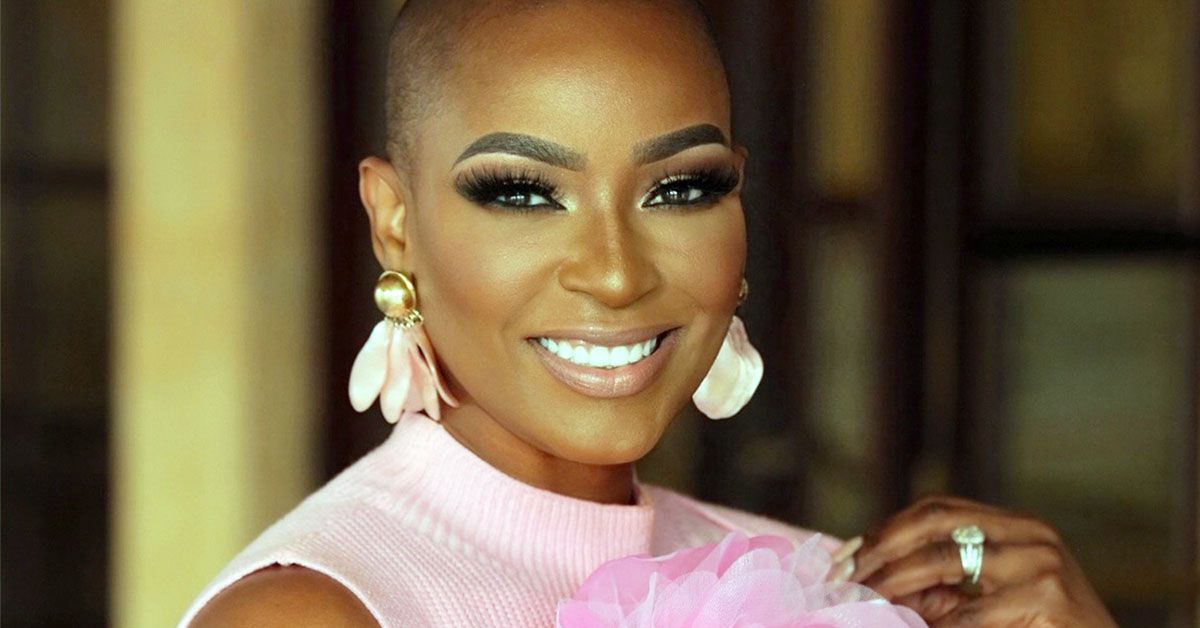
Real Housewives of Miami star Guerdy Abraira says her breast cancer journey has given her a “different type of strength and confidence.”
“My breast was very dense to the point where [my doctor said], ‘We’re not touching anything until you get a mammogram,’” she told Healthline.
The mammogram led to a diagnosis of stage 1B estrogen-receptor-positive breast cancer in her left breast. This type of cancer feeds on estrogen to grow.
“You feel such a helplessness,” Abraira said. “[There’s] a disbelief that you cannot get over for the first few months, you know? And then … you have to face the reality of it and then figure it out.”
In June 2026, Abraira had surgery to remove the cancerous tumor. She then chose to have tissue from the tumor tested with the Oncotype DX Breast Recurrence Score to determine the likelihood that the cancer would return, and whether having chemotherapy would benefit her.
The results helped her and her doctor determine that 12 weeks of chemotherapy was appropriate.
“[I’m] thankful that I was able to actually utilize this test and be able to see the mathematics of it all,” said Abraira.
She also received radiation.
“Radiation therapy is typically given to the remaining breast tissue after lumpectomy,” Doreen Agnese, MD, a surgical oncologist, clinical geneticist, and professor at The Ohio State University, told Healthline.
Agnese said radiation to the lymph nodes that are not removed in the armpit, above the collarbone, and along the breastbone is also recommended when lymph node involvement is identified, whether after a lumpectomy or a mastectomy.
Decisions about chemotherapy and targeted therapies are typically based on the size of the tumor, the status of the lymph nodes, and the receptor status of the tumor.
“These factors also help to determine sequencing of therapy. For certain types of tumors (ER positive tumors), genomic testing assays such as Oncotype or Mammaprint can help determine appropriate systemic therapy,” said Agnese.
Abraira recovered from treatment as expected.
There were tough days along the way, though. In fact, she recalled not wanting to get chemo on the first day of treatment.
“I said, ‘I am not doing this.’ And Russell looked at me, he goes, ‘Oh, yes, you are baby girl; you’re going to do this for me, and you’re going to do this for those boys right outside that door,’” she said. “And that broke me to reset.”
She decided to take each moment one at a time.
“[If] every morning I wake up, and I feel sluggish, or you know, I’m achy, I’m like, okay, close your eyes…you’re gonna get through this tunnel,” said Abraira. “And that’s how visually I was able to say focus, focus, focus, look, the light is getting brighter.”
“I am very much in the ‘I don’t have time for this phase,’” she said.
As a party planning extraordinaire, she said her mentality was always to drop everything and do whatever people needed.
“And then came cancer knocking on the door and says, ‘Sweetheart, have a seat and stay humble. It’s time…to test you,’” Abraira said. “[I] definitely feel that it gave me this different type of strength and confidence.”
Thinking of herself in two versions—before cancer and after cancer—has also helped her cope.
“[Just] now is when I’m starting to post again, old photos of [me] with hair,” she said. “I could not look at those photos of me in the past, cause it just kind of broke me.”
She is embracing the new version of herself now.
“The new me is actually the person I like better…because I don’t need all the fluff. I don’t need a wig,” she said.
She puts more focus on her health post cancer.
“My health is of utmost importance. The way I eat is different. I don’t drink the way I used to drink at all…there needs to be a really good reason why I’m drinking at this point,” she said. “[I] really focus on my health and being the best version I can be.”
Using her popularity and platform to spread awareness is rewarding for Abraira
“I pick partnerships that make sense for me,” she said.
Teaming up with Abbott to share her experience with the Oncotype DX test felt natural to her.
“[It] was kind of like, yes, this is amazing cause I can speak on it without looking at notes…It’s coming from [my heart] because I lived it, I experienced it, so I want to help,” Abraira said.
The fact that the test applies to women of all cultural backgrounds who qualify to take it makes the partnership even more special to Abraira.
“[When] you’re talking about people like my grandmother who’s so superstitious and who just wants to pray the cancer away; ‘No, no, grandma, we’re going to listen to the science, and we’re going to take this test, and this is what it’s going to show us, and we’re going to follow the steps, and then we’re going to get help to reduce the risk,” she said.
She is grateful to live in a time and country that provides access to cutting-edge science and tools, and she hopes other women take initiative to make breast health a priority.
“[Get] tested if you can…and test yourself in the shower, do all the things to make sure that you’re able to say, ‘Something ain’t right.’ You know your body more than anybody, and when you feel something, don’t just go with it,” Abraira said. “[We’re] all go-moms and we’re doing this, and we’re doing that, but if you don’t take care of you first, then what’s the point of this life?”