Browse by Categories

  • Fitness & Lifestyle (4,676)
  • Health Conditions (3,328)
  • Nutrition & Diet (242)
  • Symptoms & Diagnosis (3)
  • Home
  • Fitness & Lifestyle
  • Health Conditions
  • Nutrition & Diet
  • Symptoms & Diagnosis
  • Diet plans
  • Shop
Wednesday, April 22, 2026
PICKBYDOC
  • Login
  • Home
  • Fitness & Lifestyle
  • Health Conditions
  • Nutrition & Diet
  • Symptoms & Diagnosis
  • Diet plans
  • Shop
No Result
View All Result
  • Home
  • Fitness & Lifestyle
  • Health Conditions
  • Nutrition & Diet
  • Symptoms & Diagnosis
  • Diet plans
  • Shop
No Result
View All Result
PickByDoc – RG Diet & Wellness
No Result
View All Result
  • Home
  • Full Body Checkup
  • Wellness Shop
  • Diet Plans
  • Physician On Line
  • Blog
Home Health Conditions

Is Your Sleep App Helping or Just Stressing You Out?

g75.rajesh@gmail.com by g75.rajesh@gmail.com
04/22/2026
in Health Conditions
Reading Time: 4 mins read
A A
Is Your Sleep App Helping or Just Stressing You Out?


Share on Pinterest
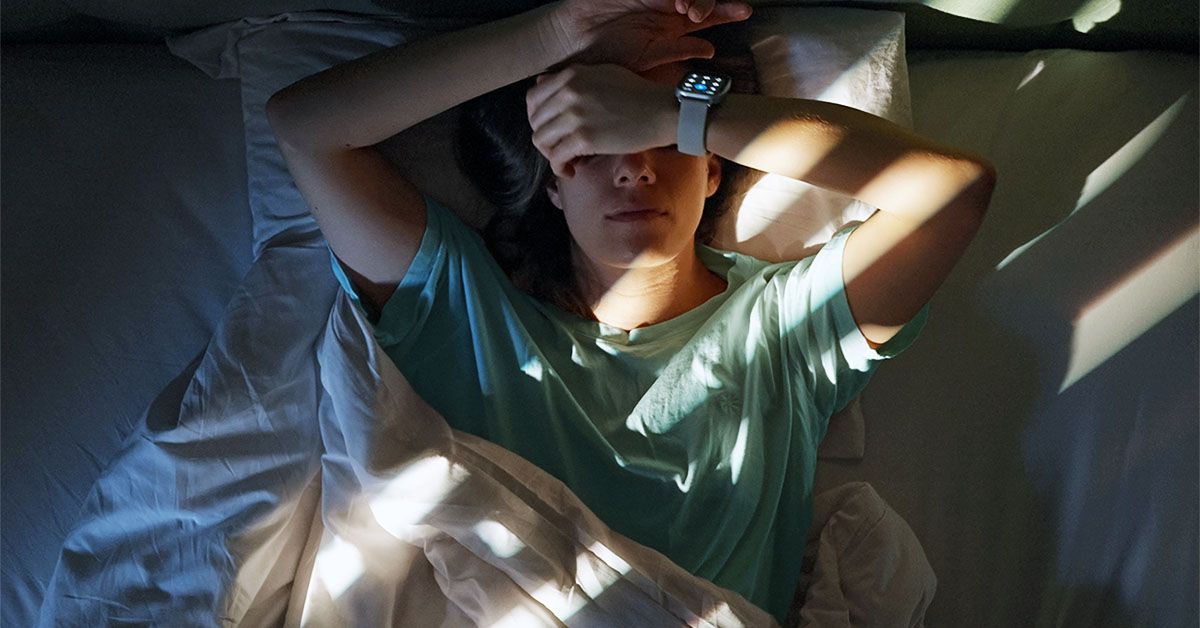
Research shows that using sleep apps may increase stress in people with insomnia. Image Credit: janiecbros/Getty Images
  • A recent study has found that the use of sleep apps may lead to negative effects in people with insomnia.
  • The researchers also note that sleep apps may not give an accurate image of your sleep.
  • Some researchers believe that constant sleep monitoring may lead to orthosomnia.

A rising interest in sleep health and the availability of sleep apps have led to a significant increase in people tracking their rest.

A recent study published in Frontiers in Psychology has found that sleep apps may be helpful to some people, but for those with insomnia, negative effects may be more likely.

The researchers also note that these sleep apps may not provide an accurate picture of your sleep and may actually make it more difficult for people to rest.

“In sleep medicine, there is something called orthosomnia, which is when people get anxious about sleep metrics, and in turn sleep more poorly from having that data. This study is in line with that concept,” said Alex Dimitriu, MD, a double board certified psychiatry and sleep medicine expert and founder of Menlo Park Psychiatry & Sleep Medicine. Dimitriu wasn’t involved in the study.

Sleep apps may vary widely, but often track similar measures for sleep, such as:

  • how long it takes you to fall asleep
  • how long you sleep for
  • how restorative your sleep is

Sleep app technology is still so new that more research is needed to understand exactly how different groups of people respond to it and how accurate it is.

“The rapid development of sleep app technology requires the scientific community to keep up with technological advances,” first study author Håkon Lundekvam Berge of the University of Bergen said in a press release.

To investigate this, the research team analyzed data from 1,002 adults in Norway. Participants were asked about their use of sleep apps, their sleep health, and whether they experienced positive or negative effects when using the apps.

Around 46% of the survey participants stated they used, or had used, at least one sleep app. The survey showed that females and people under the age of 50 were more likely to use these apps.

The results showed that males and females generally responded similarly to the apps. However, younger individuals reported stronger effects than older users.

“We found that younger adults were more affected by the feedback from the sleep apps. They reported more perceived benefits, but also more worries and stress,” said Lundekvam in the press release.

Participants reported positive effects more often than negative. Around 15% stated that sleep apps improved their sleep, while 2.3% reported their sleep was worse.

Around 48% of participants reported they benefited from learning more about their sleep. However, 17% reported that the apps increased their worry about their sleep. One of the most important findings was that people with symptoms of insomnia were more likely to experience negative effects.

The researchers noted that people with insomnia were more likely to experience negative thoughts and worries about sleep. They also found that difficulties disengaging from concerns related to sleep may have further influence over how individuals with insomnia engage with these apps.

This shows that using sleep apps may increase stress and worry about sleep.

“This study specifically identified people with insomnia as being more susceptible to negative feedback, and this makes sense, as insomniacs are a lot more likely to have anxiety. These apps give people things to worry about when they already have a lot to worry about in the first place,” said Dimitriu.

The research team encourages further research into the relationship between insomnia and the use of sleep apps.




Source link

Previous Post

Could an Avocado and Mango a Day Keep High Blood Pressure at Bay?

Next Post

What goes on in the private rooms of politicians?

g75.rajesh@gmail.com

g75.rajesh@gmail.com

RelatedPosts

Could an Avocado and Mango a Day Keep High Blood Pressure at Bay?

Could an Avocado and Mango a Day Keep High Blood Pressure at Bay?

by g75.rajesh@gmail.com
04/21/2026
0

Share on PinterestA recent study suggests a daily avocado-mango combo may offer heart health benefits, such as lowering blood pressure....

Are NSAIDs Genuinely Too Dangerous in Inflammatory Bowel Disease?

Are NSAIDs Genuinely Too Dangerous in Inflammatory Bowel Disease?

by g75.rajesh@gmail.com
04/21/2026
0

(MedPage Today) -- At least some patients with inflammatory bowel disease (IBD) can safely use common drugs for musculoskeletal aches...

Next-Generation KRAS G12C Inhibitor Shows 'Robust' Efficacy in Advanced Lung Cancer

Next-Generation KRAS G12C Inhibitor Shows ‘Robust’ Efficacy in Advanced Lung Cancer

by g75.rajesh@gmail.com
04/21/2026
0

(MedPage Today) -- SAN DIEGO -- Treatment with investigational elisrasib, a next-generation KRAS G12C inhibitor, showed efficacy in patients with...

Mycoplasma Pneumonia Recovery Faster With Corticosteroid

Mycoplasma Pneumonia Recovery Faster With Corticosteroid

by g75.rajesh@gmail.com
04/21/2026
0

(MedPage Today) -- Adjunctive corticosteroid therapy with betamethasone sped up resolution of hypoxemia in hospitalized adults with Mycoplasma pneumoniae community-acquired...

A hand drawn illustration of a young person holding their cell phone to their chest surrounded by robotic AI therapists, which are trying to get her to take a seat on a recliner couch. Text on their screens says, "TRUST ME!" "YOU'RE SO RIGHT!" "You can trust me!" and "Exactly."

Tu nuevo terapeuta: conversador, indiscreto… y difícilmente humano

by g75.rajesh@gmail.com
04/21/2026
0

Vince Lahey, de Carefree, Arizona, utiliza con entusiasmo los chatbots. Desde los productos de grandes empresas tecnológicas hasta los más...

Study on Maternal RSV Vaccine Flags Possible Risk, Calls for More Research

Study on Maternal RSV Vaccine Flags Possible Risk, Calls for More Research

by g75.rajesh@gmail.com
04/21/2026
0

(MedPage Today) -- Vaccinating against respiratory syncytial virus (RSV) during pregnancy was not associated with an increased risk of preterm...

Load More
Facebook Twitter Pinterest VK RSS

Categories

  • Fitness & Lifestyle
  • Health Conditions
  • Nutrition & Diet
  • Symptoms & Diagnosis

© 2025 PickByDoc. All rights reserved. PickByDoc is a medical news & health awareness platform.

No Result
View All Result
  • Home
  • Fitness & Lifestyle
  • Health Conditions
  • Nutrition & Diet
  • Symptoms & Diagnosis
  • Diet plans
  • Shop

© 2025 PickByDoc. All rights reserved. PickByDoc is a medical news & health awareness platform.

Welcome Back!

Login to your account below

Forgotten Password?

Retrieve your password

Please enter your username or email address to reset your password.

Log In
This website uses cookies. By continuing to use this website you are giving consent to cookies being used. Visit our Privacy and Cookie Policy.