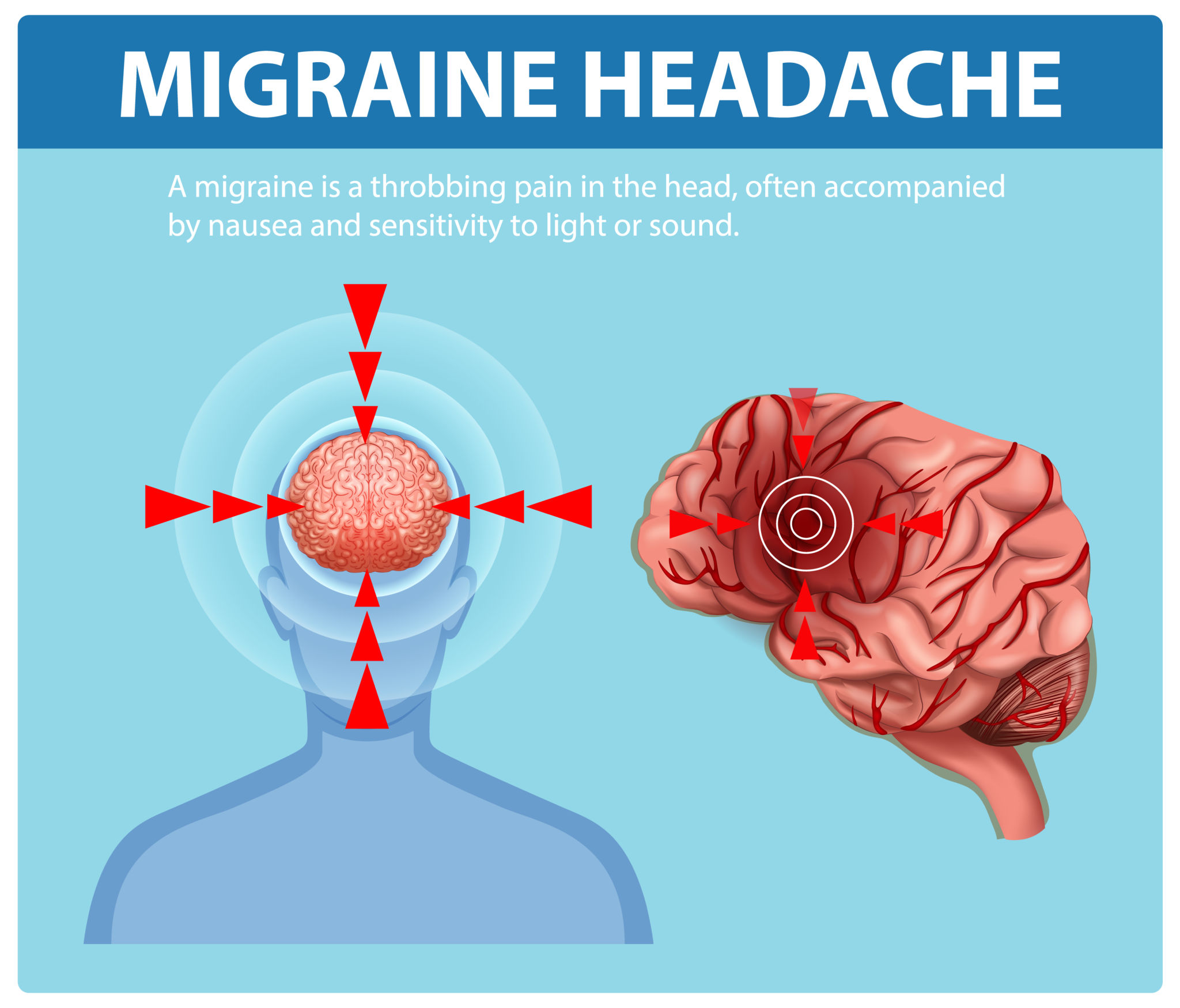
Migraine is not just a headache. It is a chronic neurological disorder involving the brain, nerves, immune system, blood vessels, and hormones. Despite affecting over 1.2 billion people globally and being the second leading cause of disability worldwide, migraine has long been misunderstood and under-researched.
Now, neuroscience is finally uncovering what actually happens during a migraine attack—and why many so-called “triggers” may not be triggers at all.
🔄 Triggers vs Early Symptoms: A Major Shift
Traditionally, migraine was thought to be triggered by factors like:
- Chocolate
- Cheese
- Perfume
- Light
- Stress or relaxation after stress
New research suggests many of these are actually early symptoms, not causes.
Example:
- Food cravings → part of the pre-migraine brain phase
- Light or smell sensitivity → brain already biologically primed
- Yawning, fatigue, mood changes → early neurological warning signs
➡️ Patients often blame what they notice during the early attack, not what started it.
🧬 Migraine Is Strongly Genetic
- 30–60% of migraine risk is inherited
- Large genetic studies have identified 100+ risk DNA variations
- Migraine genes overlap with:
- Depression
- Diabetes
- Brain structure size
- Vascular regulation
This explains why migraine often co-exists with other chronic conditions and runs in families.
⚡ The Brain Wave That Starts It All
One of the strongest theories is cortical spreading depression (CSD):
- A slow abnormal electrical wave spreads across the brain cortex
- Temporarily suppresses brain activity
- Triggers inflammation and pain signalling
🧠 In 2025, scientists observed this wave live using 95 brain electrodes in a surgical patient.
Why this matters:
- Starts in visual cortex → aura, light sensitivity
- Explains variable symptoms (aura before or after headache)
- Accounts for fatigue, brain fog, food cravings
🎯 Where the Pain Really Comes From
The pain of migraine is not felt in the brain itself, but in:
- Meninges (the brain’s outer protective layers)
- Trigeminal nerve system (face, jaw, eye, scalp)
This explains:
- Eye pain
- Jaw pain
- One-sided headache
- Facial sensitivity
🛡️ Immune System & Meninges: A New Suspect
The meninges are rich in immune cells.
New hypothesis:
- Overactive immune response → inflammation
- Acidic environment → pain fibre activation
This may explain:
- Migraine + allergies / hay fever
- Seasonal worsening
- Relief with ice packs or heat
♀️ Hormones Matter (But Aren’t the Whole Story)
- Menstrual migraine is real
- Prostaglandins and estrogen fluctuations affect brain blood vessels
- Explains female predominance and cycle-linked attacks
But hormones modulate risk, they don’t fully cause migraine.
🧪 The Breakthrough Molecule: CGRP
One of the biggest advances in migraine science:
- Calcitonin Gene-Related Peptide (CGRP) levels are:
- High during attacks
- Chronically elevated in migraine brains
CGRP:
- Amplifies pain signalling
- Sensitises nerves
🎯 This discovery led to CGRP-targeted drugs, which have transformed migraine care.
📊 Real-world impact (2025 study):
- 70% achieved ≥75% reduction in attacks
- 23% became completely migraine-free
🧠 The Big Picture
Migraine is:
- A whole-brain, whole-body disorder
- With multiple pathways leading to attacks
- Different “cocktails” of genetics, brain activity, immune signals, hormones, and environment in each patient
“There may be one final common pathway, but many roads lead to migraine.”
🩺 Clinical Take-Home Points
- Migraine ≠ headache
- Triggers may be early symptoms
- Early treatment shortens attacks
- CGRP has changed preventive care
- Migraine deserves the same seriousness as other neurological diseases