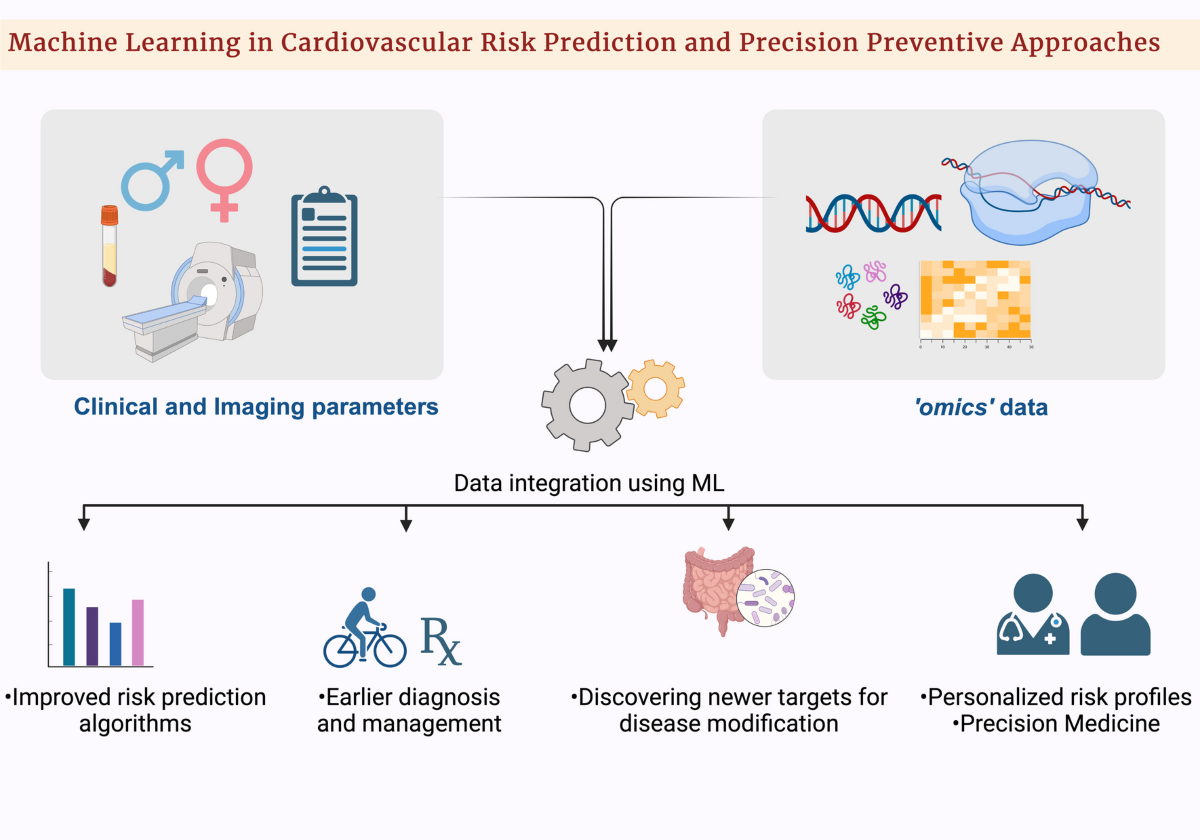
Healthcare researchers have developed an online, interpretable artificial intelligence (AI) tool that can accurately predict the risk of cardiometabolic multimorbidity (CMM) in patients with type 2 diabetes mellitus (T2DM)—a development that may significantly improve early intervention and personalised care.
🔍 What is Cardiometabolic Multimorbidity?
CMM refers to the co-existence of cardiovascular disease, metabolic disorders, and diabetes-related complications. Patients with T2DM who develop CMM face higher mortality, faster disease progression, and greater healthcare burden, making early risk identification crucial.
📊 How the AI Model Was Developed
The research team, led by Xiaohan Liu, analysed data from 793 T2DM patients at a tertiary hospital:
- Training set: 80%
- Internal validation: 20%
- External validation: 360 patients from an independent centre
Using recursive feature elimination with a random forest algorithm, researchers identified nine key clinical predictors. Six machine-learning models were trained, with a Stacking model showing the best performance.
✅ Model Performance
- Internal validation AUC: 0.868
- External validation AUC: 0.822
These results indicate strong and consistent predictive accuracy, even across different patient cohorts.
🩺 Built for Clinical Interpretability
Unlike “black-box” AI systems, this model uses:
- SHapley Additive exPlanations (SHAP)
- Local Interpretable Model-Agnostic Explanations (LIME)
These methods allow clinicians to clearly see how individual risk factors contribute to a patient’s overall CMM risk—supporting trust and real-world clinical use.
🌐 Online Tool for Real-Time Decision Support
The model has been deployed as an online tool, enabling clinicians to:
- Rapidly assess CMM risk in T2DM patients
- Identify high-risk individuals early
- Initiate timely lifestyle, pharmacological, and cardiovascular preventive strategies
This bridges the gap between advanced AI research and practical bedside decision-making.
⚠️ Study Limitations
- Data were derived from specific hospital populations
- Generalisability across different ethnic and demographic groups remains uncertain
- Large, multi-centre studies are required before widespread adoption
🌍 Why This Matters
With the global burden of diabetes rising, AI-based risk prediction tools like this may play a key role in:
- Precision medicine
- Preventing cardiometabolic complications
- Reducing long-term healthcare costs
This study highlights how artificial intelligence can support clinicians—not replace them—by enhancing risk stratification and enabling proactive care.
📚 Reference
Liu X, et al. An online interpretable machine learning model for predicting cardiometabolic multimorbidity risk in patients with type 2 diabetes mellitus. Scientific Reports. 2026.
DOI: 10.1038/s41598-026-36923-2