





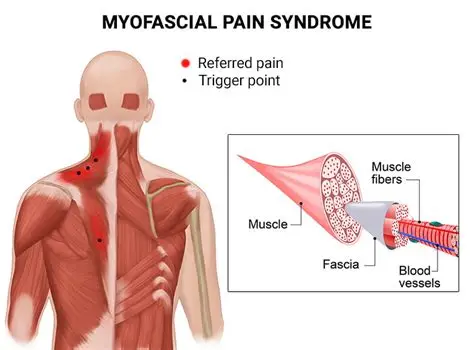
Myofascial Pain Syndrome (MPS) is a chronic pain condition that affects the muscles and the connective tissue (fascia) surrounding them. Unlike general muscle soreness, MPS is marked by the development of trigger points — tight, sensitive knots within a muscle that cause pain either at the site or in a referred area.
This often-overlooked condition can significantly affect quality of life if not diagnosed and treated effectively.
🧠 What is Myofascial Pain Syndrome?
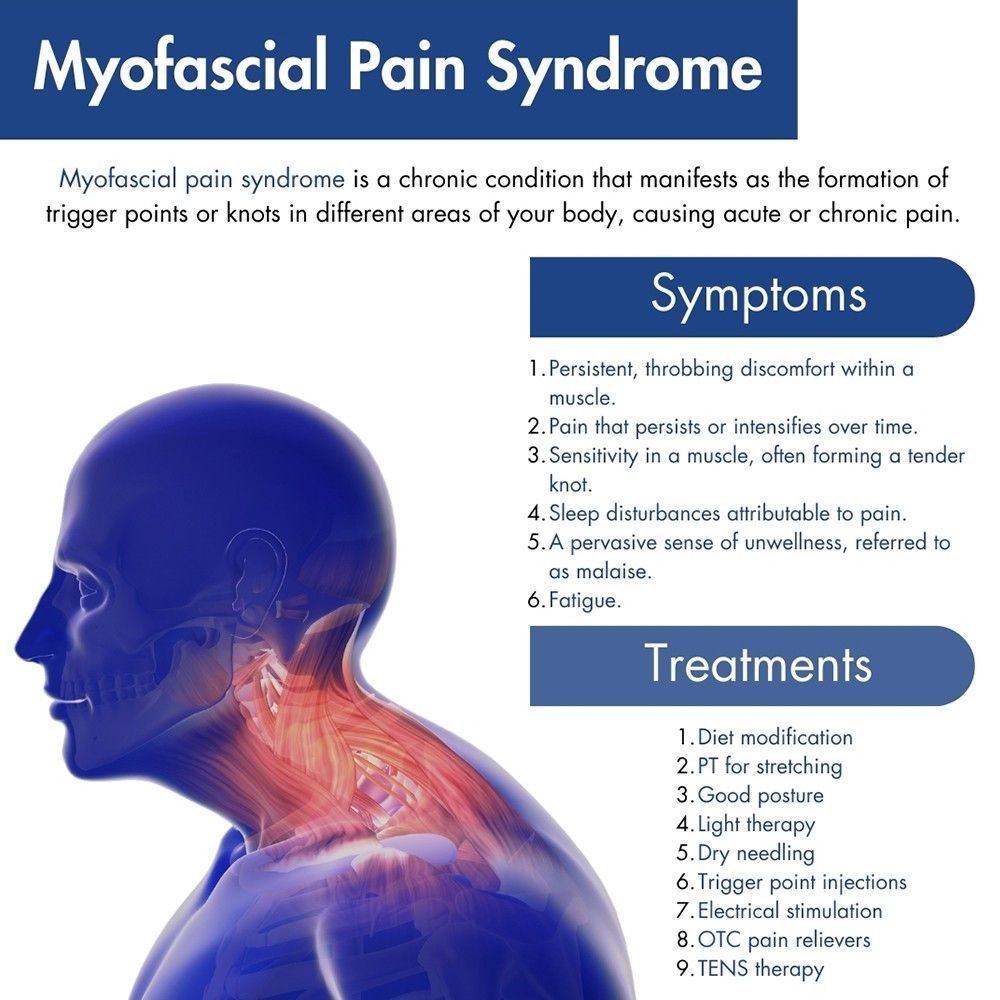
Myofascial Pain Syndrome is characterized by:
- Persistent muscle pain, often deep, throbbing, or aching
- Formation of trigger points — tight bands or knots in muscles
- Pain that can be localized or referred (felt in another part of the body)
- Chronic discomfort that may be worsened by stress or activity
While it can affect anyone, it is more commonly seen in people with repetitive strain, poor posture, or psychological stress.
⚠️ Common Symptoms of MPS
Myofascial Pain Syndrome symptoms vary from mild discomfort to debilitating pain. The most common signs include:
- Persistent, throbbing muscle discomfort
- Pain that intensifies over time or with use
- Muscle sensitivity — often forming a palpable tender knot
- Disturbed sleep due to pain or muscle tension
- A general sense of fatigue or malaise
- Restricted range of motion in affected areas
These symptoms can mimic other conditions like fibromyalgia, making proper diagnosis essential.
🔍 What Causes Myofascial Pain Syndrome?
While the exact cause is often multifactorial, common contributors include:
- Poor posture and ergonomics
- Repetitive movements (e.g., typing, lifting)
- Muscle overuse or trauma
- Emotional stress or anxiety
- Sedentary lifestyle
- Nutritional deficiencies (like vitamin D or magnesium)
Trigger points can remain latent or become active after a physical or emotional trigger.
🛠️ Treatments for Myofascial Pain Syndrome
Effective management involves a combination of physical therapy, lifestyle changes, and medical interventions.
✅ Conservative & Lifestyle Treatments:
- Diet modification (anti-inflammatory foods, hydration)
- Stretching routines guided by physiotherapists
- Posture correction through ergonomic assessment
- Light therapy to enhance circulation and healing
- TENS therapy (Transcutaneous Electrical Nerve Stimulation)
- OTC pain relievers (NSAIDs or topical analgesics)
💉 Advanced Therapies:
- Dry needling – similar to acupuncture, targets trigger points
- Trigger point injections – with local anesthetic or corticosteroids
- Electrical stimulation – to relax tight muscle bands
Recovery often requires a multidisciplinary approach involving physiotherapists, pain specialists, and lifestyle coaches.
🧘 Prevention & Self-Care Tips
- Practice daily stretching and mobility exercises
- Maintain good posture, especially at workstations
- Use ergonomic chairs and keyboards
- Manage stress with meditation, yoga, or breathing techniques
- Avoid muscle overuse and stay physically active
🩺 When to Seek Help
You should see a healthcare professional if you experience:
- Pain that persists for more than a few weeks
- Discomfort that interferes with sleep or daily activities
- Muscle knots that don’t respond to massage or rest
- Widespread pain without a clear cause
Early diagnosis and therapy can prevent the transition from acute muscle strain to chronic MPS.
💡 Final Thoughts
Myofascial Pain Syndrome is more than just a sore muscle — it’s a chronic pain condition that requires attention, awareness, and structured management. Whether you’re a working professional, athlete, or homemaker, learning to recognize trigger points and adopting healthy muscle habits can make a significant difference.
If you’re struggling with muscle pain that just won’t go away, consult a physiotherapist or pain management specialist today. Relief might be just a few stretches or trigger point releases away.