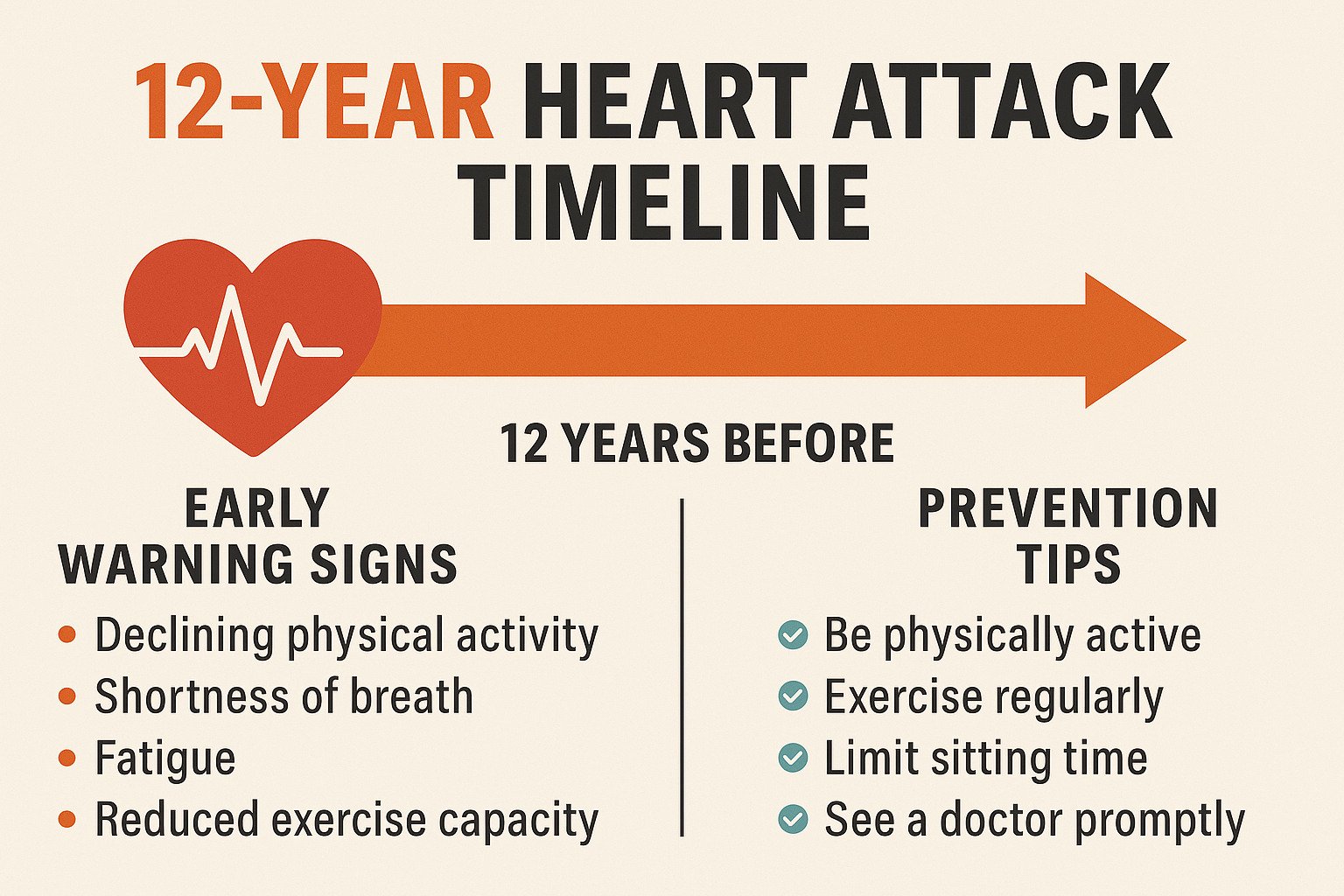
Heart attacks Signs are often thought of as sudden and unpredictable — but new research suggests they can be years in the making.
Subtle warning signs may start appearing up to a decade before the event. One of the most important early clues?
A gradual and significant drop in your physical activity levels.
The Doctor’s Warning
Dr. Sudhir Kumar, a neurologist trained at CMC Vellore and currently practising at Apollo Hospitals, Hyderabad, recently shared insights that could help save lives.
According to him, moderate-to-vigorous physical activity (MVPA) — such as brisk walking, swimming, or cycling — starts to decline about 12 years before a heart attack or other major cardiovascular event.
This decline accelerates in the final two years before the diagnosis.
What the Research Says
A landmark study — The Coronary Artery Risk Development in Young Adults (CARDIA) Study, published in JAMA Cardiology — tracked individuals from young adulthood into midlife.
Findings revealed:
- Those who later suffered heart attacks had a steeper decline in physical activity compared to those who remained heart-healthy.
- Black women had the lowest lifetime activity levels and faced higher risk after cardiovascular events.
Why This Matters
Aging naturally reduces activity levels, but in heart patients, this decline is sharper and earlier.
You might notice:
- Less energy for walking or climbing stairs
- Skipping regular exercise without clear reason
- Gradual withdrawal from physical hobbies or sports
Ignoring these changes can mean missing a critical window for prevention.
Prevention is Key
Experts, including Dr. Kumar, recommend:
- 150 minutes/week of moderate-to-vigorous activity
- Strength training at least twice a week
- Regular heart check-ups if you notice reduced stamina
- Early intervention if diagnosed with hypertension, diabetes, or high cholesterol
Tip: If you’ve had a cardiac episode, start exercising again — but under medical supervision. Cardiac rehabilitation programs can speed recovery and improve long-term survival.
Action Plan for a Healthy Heart
- Track your movement — Use a pedometer or fitness tracker.
- Avoid long sitting periods — Stand or walk every 30–60 minutes.
- Mix your workouts — Cardio, strength, and flexibility training.
- Watch for subtle changes — Even small drops in activity matter.
- See a doctor early — Especially if you feel more tired than usual.
Bottom Line
Heart attacks may not be as sudden as they seem.
A slow, steady decline in your activity — starting years before — can be the body’s silent alarm.
Recognizing and acting on this sign could save your life.
Stay active. Stay aware. Protect your heart.